




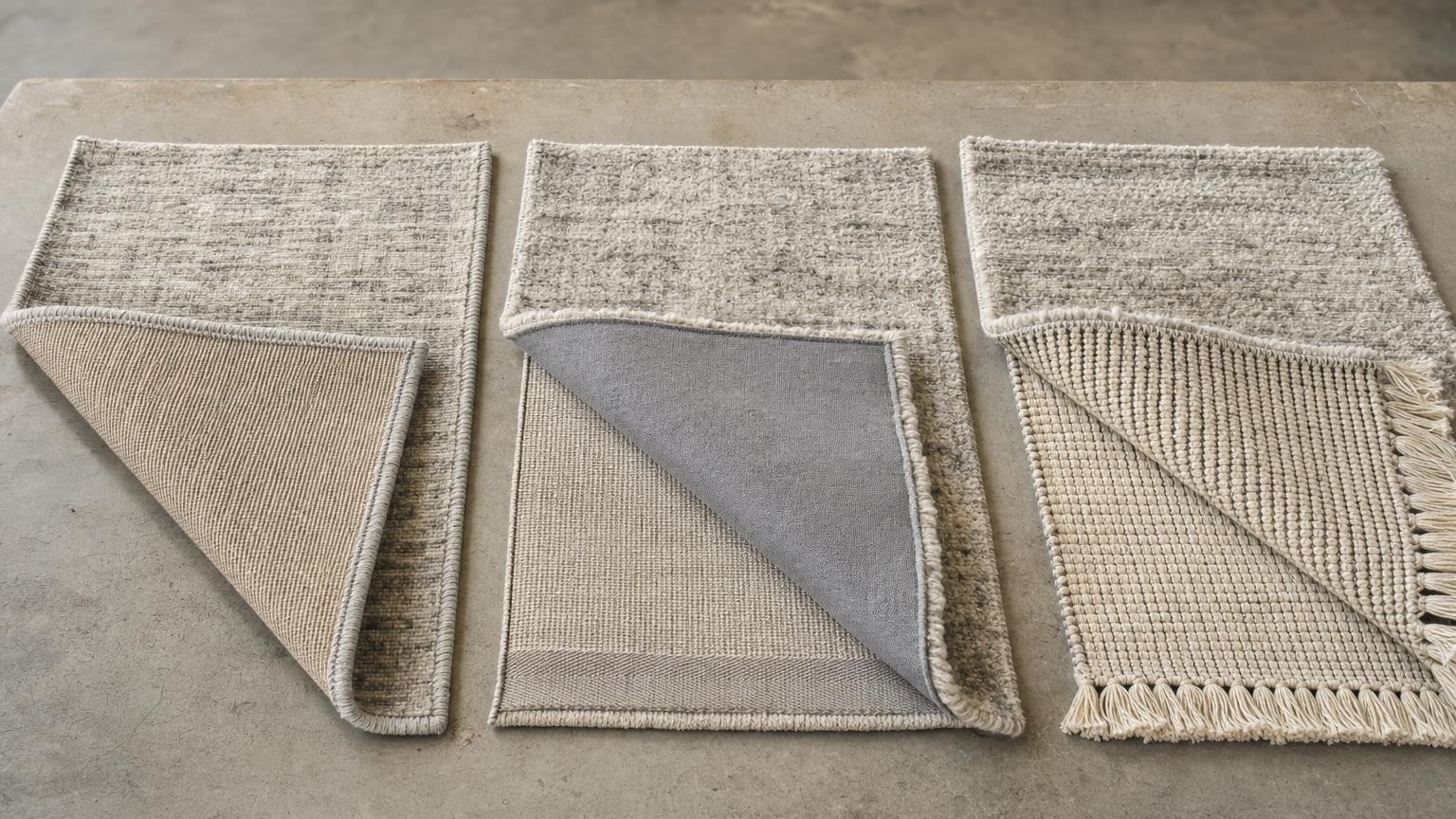
A rug’s construction describes how its yarns and supporting structure are assembled. It affects how securely the pile is held, how the rug flexes, what happens when it becomes wet and whether local damage can be repaired. It can also influence pattern definition, shedding, edge wear and the amount of debris retained below the visible surface.
Construction is not a simple quality ranking. A well-chosen machine-woven rug may be more practical for a busy dining area than a rug requiring specialist care, while a hand-knotted rug may appeal to someone who values repairability and traditional structure. Fibre, pile type, density, finishing and household conditions all matter alongside the construction label.
How the three constructions hold together
Machine-woven rugs
Machine-woven rugs are produced on powered looms. Depending on the weaving system, yarns are mechanically interlaced with or incorporated into a woven foundation. The structure is generally integrated rather than relying on a separate fabric backing to hold every pile yarn in place.
Machine production can create consistent repeats, even surfaces and detailed patterns. However, “machine-woven” covers many materials, pile styles and weave structures. It does not by itself reveal softness, density, expected wear or cleaning requirements.
Tufted rugs
In a tufted rug, yarn is inserted or punched through a primary fabric backing to form loops. Those loops may remain intact or be cut to create a cut-pile surface. An adhesive layer is typically applied to the reverse to help secure the yarn, and a secondary backing may then be attached to cover and stabilise the construction.
Tufting makes it possible to produce thick, textured and sculpted surfaces without tying individual knots. Both hand-operated tools and industrial machinery can be used, so “hand-tufted” means something different from “hand-knotted”. The hand-guided placement of tufts does not change the basic dependence on backing and adhesive.
Hand-knotted rugs
A hand-knotted rug is built on a foundation of lengthwise warp yarns and crosswise wefts. Individual pile yarns are tied around the warps, with weft rows helping to lock the structure together. The pile is later clipped and finished to the desired height.
Because the pile is tied into the foundation, the underside often reveals the pattern and knot structure rather than a fabric covering. Fringes may be extensions of the foundation warps, although decorative fringe can also be added separately. Labels such as handmade, hand-finished, hand-tufted and hand-knotted should not be treated as interchangeable.
Density, pile and weight: specifications in context
Knot density is relevant to hand-knotted rugs, while stitch or tuft density may be used for tufted constructions. Machine-woven rugs can be described through points, picks, weave tightness or other manufacturer-specific measures. These figures are not directly interchangeable.
A higher density can support intricate pattern work or a compact surface, but it is not a universal measure of durability or value. Thick yarn can create a substantial rug with fewer pile elements per unit of area, while fine yarn may permit more detail at a higher count. Fibre strength, yarn twist, foundation quality and finishing remain important.
Pile height describes how far the surface yarn extends above its base. A low pile is generally easier to vacuum and may interfere less with doors or moving chairs. A deep pile can feel cushioned but may conceal crumbs, take longer to dry and show compression under furniture. Rug weight can indicate how much material is present, but heavy backing, thick adhesive or dense fibre can all add weight for different reasons.
Specifications are therefore most useful when comparing rugs of a similar construction, fibre and intended texture. A knot count should not be compared directly with a tuft count, and neither should be read without considering pile height and yarn thickness.
Backing, adhesives and edge finishing
The reverse of a rug provides useful clues about its structure. On many woven and hand-knotted rugs, foundation yarns form part of the rug itself. On tufted rugs, the primary backing receives the yarn and the adhesive helps secure it; a secondary textile backing may conceal this layer and improve dimensional stability.
Adhesive condition matters because age, moisture, heat and cleaning history can affect some compounds. Warning signs can include cracking, powdery residue, persistent flaking or layers separating from one another. These symptoms should not be diagnosed from the construction label alone, but they warrant closer inspection.
Edges also carry structural loads. Serging wraps yarn around an edge, while binding encloses it with a strip of material. Loose stitching, frayed corners and detached binding can allow damage to progress if ignored. At the ends, reinforced stitching may prevent woven rows from opening. Fringe needs similar attention: foundation fringe should not be casually cut because it may be part of the underlying structure.
What construction changes underfoot and in appearance
Machine-woven rugs often have a regular surface and consistent pattern repeat. Hand-knotted rugs may show subtle variations associated with manual knotting, yarn preparation and finishing. Tufted rugs can readily combine colours, pile heights and carved outlines, creating pronounced sculptural effects.
These are tendencies rather than rules. Fibre and pile treatment can outweigh construction when it comes to immediate feel. Wool, cotton, viscose-type fibres and synthetics behave differently, while yarn thickness and twist influence softness and resilience.
Cut pile has exposed yarn ends and may feel plush, but it can fuzz or show loose fibres. Loop pile keeps the yarn in loops, creating a firmer surface that may be vulnerable to catches from claws, sharp objects or rough furniture feet. Mixed-pile rugs combine cut, looped or raised areas for visual texture, although uneven heights can require more deliberate cleaning.
Flexibility also varies. Foundation weight, density, backing and adhesive can make one rug supple and another relatively stiff even when their visible piles look similar. Thickness should therefore be checked with practical issues in mind, including door clearance, chair movement and the risk of a raised edge becoming a trip point.
Shedding, crushing and everyday wear
Shedding is not the same as the pile structure coming apart. New cut-pile rugs may release loose fibres or clipping residue left from finishing. Rugs made with staple fibres can also shed as short fibres work towards the surface. This may reduce with suitable vacuuming, but the amount varies by fibre, yarn construction and finishing.
By contrast, repeated yarns pulling out, loops opening or tufts releasing from the backing may indicate snagging, local damage or a structural problem. Long loops can catch more readily in homes with pets, while aggressive vacuum brushes may disturb delicate surfaces or fringes. The care label should guide the choice of suction level and brush setting.
Common wear patterns include flattening in walkways, compression beneath furniture, fuzzing, isolated sprouts and abrasion along exposed edges. Sprouts should usually be trimmed level rather than pulled, as pulling can disturb neighbouring yarn. Regular rotation can distribute traffic and light exposure, while an appropriate rug pad may reduce movement and cushion the structure. It cannot, however, compensate for failing backing or unsuitable care.
No construction is automatically immune to wear. A dense rug can still crush, an expensive rug can be damaged by poor cleaning and a modest machine-woven rug can perform well when its materials and placement suit the room.
Cleaning consequences before a spill happens
Cleaning suitability should be considered before purchase, especially for dining rooms, entrances and homes with children or pets. Dense and deep piles can trap dry soil below the visible surface. Removing that material may take careful vacuuming from more than one direction, provided the manufacturer’s instructions permit it.
Moisture introduces additional considerations. In a tufted rug, heavy saturation can reach the adhesive and secondary backing. Depending on the materials and condition, this may contribute to odour, slow drying, staining migration or layer separation. Flooding a tufted rug because only the pile appears dirty is therefore unwise unless the care instructions explicitly support that method.
Woven and hand-knotted structures do not necessarily make wet cleaning straightforward. Fibre sensitivity, unstable dyes, fringe, foundation yarns and drying conditions all affect the result. Some fibres can change texture, distort or show water marks, and colour may transfer if dyes are not stable.
For routine care, remove spills promptly using the specified method, avoid rubbing that spreads the stain or distorts the pile, and do not assume that a household cleaner is suitable for every fibre. Specialist advice is sensible for valuable rugs, widespread staining, uncertain dyes or problems involving adhesive and backing.
Repairability and the limits of restoration
Some damage can be addressed locally. A rug repairer may be able to resecure edge binding, reinforce an end, repair limited fringe damage, deal with an isolated loose yarn or rebuild a small area of lost pile. Feasibility depends on access to the underlying structure and the ability to match the original fibre, colour, yarn thickness and pattern.
Hand-knotted rugs can sometimes support detailed structural repairs because individual areas of foundation and pile may be reconstructed. This does not mean every repair is easy or economical. Fine patterns, extensive damage and difficult colour matching can require considerable labour.
Woven rugs may permit edge or small-area repairs, but machine-made structures and complex repeats can be difficult to reproduce invisibly by hand. In tufted rugs, limited re-tufting may be possible, yet widespread adhesive breakdown or delamination is a different problem. If the layer securing the pile is failing across a large area, treating isolated tufts may not restore the overall structure.
Repair cost should be weighed against financial value, sentimental value and the likelihood of further deterioration. Asking about repairability before buying is particularly useful when a rug is intended as a long-term furnishing rather than a short-term decorative change.
Matching construction to the room and ownership style
For busy walkways, prioritise a manageable pile, stable edges and a surface that suits frequent cleaning. A dense, very deep pile may feel luxurious but demand more effort where grit is regularly tracked indoors. In dining areas, consider whether chair legs move easily and whether crumbs can be removed without specialist attention.
Bedrooms may accommodate softer or deeper textures because traffic and spill exposure can be lower. Furniture-heavy rooms call for realistic expectations about compression; rotation may help, but heavy items can leave lasting impressions. Protective furniture cups may spread loads where appropriate.
Pet owners should consider claws, loops, shedding visibility and ease of hair removal. A highly textured loop or fringe can present more opportunities for snagging than a close, even surface. Colour and pattern also affect how visible everyday hair and debris appear, regardless of construction.
Ownership style matters as much as room type. Some shoppers are comfortable arranging periodic professional cleaning and repairs. Others need straightforward vacuuming, quick spot care and low concern about gradual visible ageing. The better choice is the construction and material combination that fits those habits, not the one with the most prestigious-sounding label.
Inspect the whole build, not just the construction name
Before buying, verify whether the rug is machine-woven, tufted or hand-knotted, then identify the fibre and pile type. Look at available images of the reverse, edges and fringe. Treat density figures cautiously, checking whether they refer to knots, stitches or another measurement. Review pile height, overall thickness, weight and care instructions in relation to the intended room.
Finally, consider traffic, spills, pets, furniture, vacuuming and likely repair costs. Rug construction explains how the components are held together, but performance emerges from the whole build – foundation, pile, fibre, backing, adhesive and finishing – combined with how the rug is used and maintained.
Continue exploring on Frowse
Discover More Frowse Insights
- Lumens, Candela and Beam Distance: How to Read Flashlight Specifications
- What to Look for in a Heated Clothes Airer for a British Winter
- Why Paper Weight Alone Cannot Tell You How Printer Paper Will Perform
- Why Staples That Look the Same Do Not Fit Every Stapler
- Oscillating, Impact and Rotary Sprinklers: How Their Watering Patterns Differ