





What Changes in a Pot Actually Mean
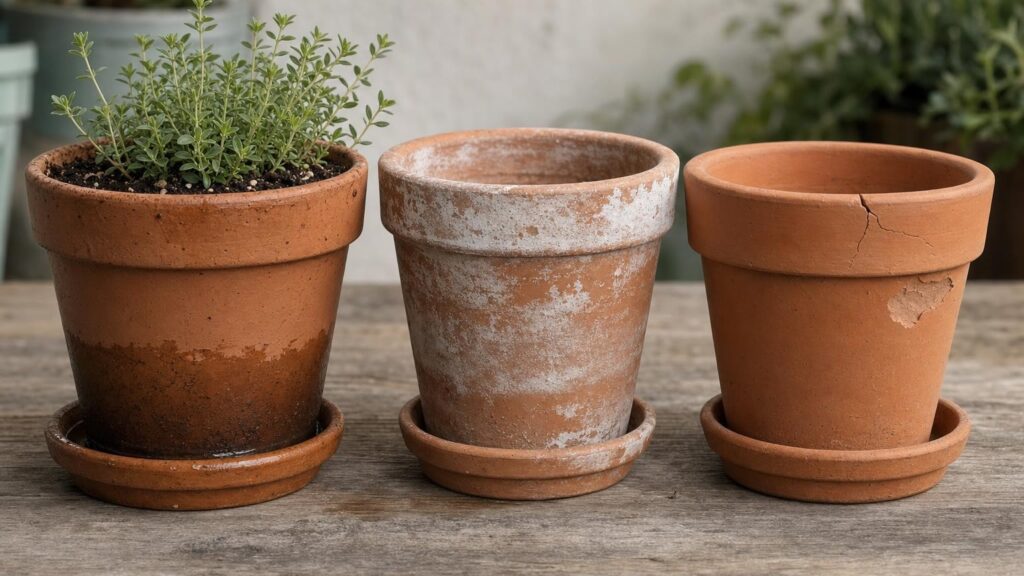
A terracotta pot that becomes darker after watering, develops a pale crust or acquires a fine crack is showing the effects of moisture, minerals, temperature or physical stress. These changes may appear together, but they do not necessarily have the same cause or significance.
Darkening is often a normal consequence of water entering porous clay. White deposits are commonly minerals carried by water or left behind as it evaporates. Cracks, flaking and detached glaze deserve closer attention because they can indicate material stress. Understanding the differences helps you decide whether a mark is harmless character, a maintenance issue or evidence that a pot is becoming structurally unreliable.
How Clay, Firing and Glazing Control Porosity
Ceramic pots are made by shaping clay and firing it at high temperature. The clay mixture and firing process determine how much open pore space remains in the finished body. Traditional unglazed terracotta generally retains a connected network of fine pores through which water and water vapour can move.
This porosity can be useful for plants that benefit from a growing medium which dries relatively readily. It also means the pot may lose moisture faster than a less porous container, show visible damp patches and allow dissolved minerals to travel through its walls.
Higher firing and suitable clay formulations can produce a denser, more vitrified ceramic body. Vitrification occurs as components of the clay fuse during firing, reducing water absorption. It is not an all-or-nothing condition: ceramics can vary greatly in density even when their surfaces look similar.
Glaze adds another variable. A fired glaze can reduce water movement through the areas it covers, but a glazed exterior does not automatically make the whole pot impermeable. The inside, base, drainage-hole edges or foot may remain unglazed. Fine defects, wear and the underlying ceramic body can also affect moisture behaviour.
Partially glazed pots therefore sit between traditional terracotta and more fully vitrified ceramics. They may provide a decorative, easier-to-wipe exterior while still absorbing water through exposed clay. When comparing pots, look beyond colour and shine: where the glaze is applied and how the ceramic body is described matter more than appearance alone.
Why Terracotta Darkens When It Gets Wet
Dry terracotta contains air within its pores. When water enters, it changes the way light interacts with the material, making the clay look darker and often more saturated in colour. The effect is similar to the darkening of many other porous materials when wet.
Temporary, fairly even darkening after watering is usually normal. The pot should gradually lighten as moisture evaporates. Uneven patches can also be expected where the growing medium is wetter, one side receives more sun or airflow, or the clay varies slightly in thickness and porosity.
Persistent dark areas merit investigation rather than immediate alarm. They can indicate that part of the pot remains continually damp because of frequent watering, compacted growing medium, a blocked drainage hole or water standing in a saucer. A pot pressed against an absorbent or poorly ventilated surface may also dry unevenly.
Green, brown or black surface discolouration is not always simple wetting. Outdoor exposure and continuously damp conditions can encourage algae or other surface growth, while soil, rust-coloured irrigation residues and contact with surrounding materials may leave stains. If a mark remains after the pot is thoroughly dry, it is more likely to be a deposit, growth or stain than temporary moisture darkening.
Where White Deposits Come From
White or pale deposits on terracotta are often described as efflorescence. Water dissolves mineral salts from the growing medium, fertiliser, irrigation water or, in some cases, the ceramic itself. As moisture moves through the porous wall and evaporates at the exterior, some of those dissolved materials remain on the surface.
Residues can also form without travelling through the pot wall. Hard water splashed onto the rim or outside may leave a pale mark as it dries. Fertiliser solution can produce a deposit around the soil line, drainage hole or saucer. Location offers a useful clue: widespread bloom through an unglazed wall suggests moisture migration, while rings beneath the rim or spots from splashing point towards surface evaporation.
Many white deposits are cosmetic and form part of the weathered appearance associated with terracotta. They are not, by themselves, proof that the pot is failing. However, rapid or repeated heavy build-up can reveal substantial water movement, frequent fertiliser use, hard irrigation water or a pot that rarely dries.
It is also important not to confuse a removable mineral crust with deterioration of the ceramic. A deposit usually sits on the surface and may powder or brush away. Deteriorating clay may feel soft or crumbly, shed flakes, reveal small pits or lose layers when handled. That distinction matters because cleaning can remove residue, but it cannot restore weakened ceramic.
Cracks, Flaking and Spalling: Signs of Material Stress
Ceramic is hard but brittle. A pot may crack after a knock, a fall or being dragged over an uneven surface. Existing weaknesses from forming, drying or firing can also become visible later, especially once the container is loaded with wet growing medium and a plant.
Roots can exert pressure as a plant outgrows its container, although not every root-bound plant will crack a pot. Blocked drainage can keep the ceramic and growing medium saturated, increasing weight and exposing the pot to prolonged moisture. Repeated wetting and drying may contribute to stress where the body, glaze or repaired areas move differently.
A fine surface line is not always a structural fracture. Some glazed finishes intentionally show a network of fine lines, while shallow marks may affect only the glaze. Examine whether a line continues through the rim, wall or base, opens under normal handling, leaks water or is accompanied by movement. A crack crossing the full thickness is more significant than a stable surface mark.
Flaking and spalling involve pieces or layers breaking away from the surface. Warning signs include a crumbling rim, scales of clay detaching, bulges beneath glaze or sharp fragments separating from the body. Detached glaze also exposes the underlying ceramic to moisture and can create sharp edges. A badly fractured pot should not be relied upon to carry a heavy plant, particularly where failure could damage flooring or create a falling hazard.
Freeze-Thaw Exposure and Outdoor Suitability
Freeze-thaw damage occurs when water absorbed by a ceramic body freezes and creates pressure within its pore structure. Repeated cycles can enlarge tiny weaknesses, eventually causing cracks, flakes or complete breakage. Saturation is central to the risk: a relatively dry pot has less absorbed water available to freeze than one holding wet compost and standing in water.
Labels such as frost-resistant should not be read as absolute guarantees in every setting. Performance depends on the ceramic body, manufacturing consistency, degree of saturation, number and severity of freezing cycles, drainage and placement. A pot that performs well in a sheltered position may face greater stress in an exposed area where rain repeatedly soaks it before freezing weather.
For cold climates, prioritise clear outdoor-suitability information, effective drainage and a stable position raised away from standing water. Shelter from persistent winter rain can help reduce saturation. Empty seasonal pots can be cleaned, dried and stored under cover, but avoid assuming that bringing a saturated pot into sudden warmth is beneficial: abrupt temperature changes can themselves stress ceramic.
Drainage, Pot Shape and Surface Protection
Drainage holes allow excess water to leave the growing medium, but their number and size must be considered alongside the plant, potting mix and watering routine. A hole can become obstructed by compacted material, roots or a flat surface beneath the pot. Feet, risers or a base designed to provide clearance can help water escape outdoors.
Saucers protect shelves, floors and furniture from drainage, yet water should not be allowed to stand against a porous base unless the plant’s care requires that arrangement. Indoors, an unglazed terracotta pot can transmit dampness even before water visibly overflows. A waterproof saucer or suitable outer container provides useful surface protection, although trapped water still needs monitoring.
Shape also affects use. A wide, stable base may resist tipping, while a narrow opening can make repotting a root-filled plant difficult. Thick walls can increase weight and may buffer short-term temperature changes, but thickness alone does not guarantee frost durability. Pronounced rims offer grip but may be vulnerable to knocks, and decorative projections can become stress points.
Glazed surfaces generally wipe clean more readily and can reduce evaporation through the covered wall. This may help retain moisture, but it also changes watering needs compared with porous terracotta. The best choice depends on the plant, environment and your willingness to monitor moisture rather than on a universal rule that one material is superior.
What to Examine Before Buying
Begin with the intended location. An indoor pot needs dependable surface protection and dimensions that suit its saucer, liner or outer container. An outdoor pot may need drainage clearance, weather suitability and enough stability for an exposed position.
- Check exposed surfaces: Identify which parts are glazed and whether the interior, base and drainage-hole edges remain porous.
- Inspect for damage: Look closely at the rim, base, handles and decorative details for cracks, chips, crumbling areas or glaze lifting away.
- Assess stability: Place the empty pot on a level surface where possible. A slight handmade irregularity may be cosmetic, but significant rocking becomes more problematic with a tall plant.
- Review drainage: Confirm whether holes are present and whether their position will remain open on the intended surface. Decorative cachepots may have no drainage and require a separate inner pot.
- Consider usable dimensions: External measurements do not always reveal the internal space available after accounting for thick walls, a tapered base or a liner.
- Allow for total weight: Ceramic, wet growing medium and a mature plant can become difficult to move. Make sure the shelf, stand or furniture is suitable for the completed arrangement.
- Examine finish consistency: Natural variation can be desirable, but unexplained blisters, open cracks and loose flakes are different from intentional texture.
Cleaning and Ongoing Care Without Damaging the Pot
Start with the least aggressive method. Let loose soil dry, then use a soft brush or cloth to remove it. Gentle washing with water may be enough for ordinary dirt and some fresh deposits. Avoid forcing water into an already damaged or flaking surface.
Mineral crusts can be stubborn, but stronger cleaners and acidic solutions may alter clay colour, grout-like decoration, metallic finishes or glaze. Follow any care instructions supplied with the pot and test a proposed method on an inconspicuous area first. Do not use highly abrasive tools on glazed or decorated surfaces, as scratching can permanently dull the finish.
Keep drainage openings clear and empty saucers after excess water has drained unless the plant requires a different watering method. Periodically check the base and rim, where cracks may begin unnoticed. Before freezing weather, allow vulnerable porous pots to dry as far as practical and move them to a sheltered location if appropriate.
Avoid abrupt transitions between very cold and hot conditions. Ceramic can also be damaged by rough handling when wet and heavy, so move large planted pots using suitable support rather than pulling on the rim.
Choose for Moisture Behaviour, Not Appearance Alone
Terracotta’s changing colour and mineral bloom often reflect its defining feature: a porous body through which moisture can move and evaporate. These effects may be harmless and visually appealing, but persistent dampness, rapid residue build-up, crumbling clay or widening cracks call for closer attention.
When choosing between unglazed terracotta, partially glazed pots and denser ceramics, consider drainage, climate, placement, plant needs and surface protection alongside appearance. A pot selected with its moisture behaviour in mind is easier to care for – and less likely to produce unwelcome surprises after watering or winter weather.
Continue exploring on Frowse
Discover More Frowse Insights
- How a Rice Cooker Knows When the Water Is Gone – and What Fuzzy Logic Changes
- Why a “High-Pressure” Showerhead Cannot Create More Water Pressure
- HDMI ARC, eARC or Optical: Which Soundbar Connection Do You Need?
- The Roof-Rack Fit Problem: Rails, Fixing Points and Clamp Systems Explained
- Why Reflective Privacy Window Film Stops Being Private at Night