





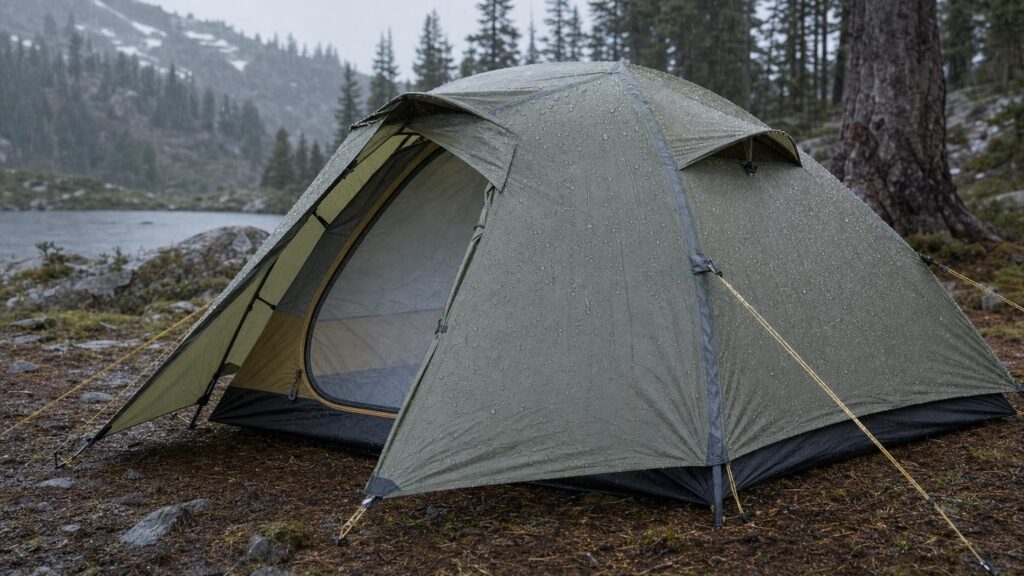
A waterproof number cannot describe the whole tent
A tent’s waterproof rating is useful, but it does not tell you whether the complete shelter will keep rain away from its occupants. Water can enter through seams, zips, vents, attachment points and poorly protected doors even when the main fabric resists considerable water pressure. Moisture can also appear inside because of condensation rather than leakage.
Real-world rain protection is therefore a system. It combines the flysheet and floor materials with seam construction, coverage, ventilation, tent shape and pitch stability. Site selection, correct setup and ongoing care also matter. When comparing tents, treat the headline waterproof figure as one piece of evidence rather than a simple score.
What a hydrostatic-head rating actually measures
A hydrostatic-head rating indicates how much water pressure a fabric can resist in a controlled test before water passes through it. It is generally expressed in millimetres. In simple terms, a higher figure indicates greater resistance to water pressure under the relevant test conditions.
That does not make the highest available number the right choice for every trip. Increasing water resistance can involve changes to coatings, fabric weight, stiffness, packed size, breathability, durability or price. The practical value of a particular rating depends on where and how the tent will be used. Occasional camping in sheltered conditions presents different demands from prolonged exposure, exposed pitches or repeated use on saturated ground.
It is also important to separate the ratings of the flysheet and groundsheet. Falling rain usually places different demands on a flysheet from those placed on a floor by people, sleeping mats and equipment pressing against wet ground. A tent may consequently use different fabrics, coatings and ratings for these two components.
When comparing specifications, check that the figure clearly identifies the component being measured. Test methods and reporting conventions may also differ between manufacturers, so small numerical differences should not automatically outweigh more visible design and construction differences.
Fabric, coatings and construction change the practical result
The waterproof layer is only one part of a tent textile. Manufacturers can combine different base fabrics, weaves, coatings or laminates to balance water resistance with weight, strength, flexibility, packed size and cost. Two fabrics with similar hydrostatic-head figures may therefore feel and perform differently over their working lives.
The base textile helps determine characteristics such as tear resistance, stretch and abrasion tolerance. The waterproof treatment then limits water penetration. Some treatments are applied to one face of the material, while others may penetrate or bond with the fibres differently. These distinctions can affect how a tent should be cleaned, repaired or reproofed.
Stretch is particularly relevant in rain. Some fabrics can relax or sag when wet, reducing the space between the flysheet and inner tent. A fabric that appears neatly tensioned in dry weather may need adjustment once conditions change. Manufacturing consistency matters too: a strong material specification cannot compensate for poor joins, uneven treatment or weak finishing.
Shoppers should therefore look beyond a single rating and consider the complete material description. Useful questions include whether the stated figure applies to a new fabric, how the material balances weight and robustness, and whether the maker provides clear care and repair instructions.
Seams, zips and attachment points are vulnerable details
Sewing creates needle holes, while joins place stress on multiple layers of material. These areas can admit water before the uninterrupted fabric does. Seam design and treatment are consequently central to rain protection.
Taped seams normally have tape bonded over the stitching during manufacture. Factory-sealed seams may use a compatible sealant or another construction method. User-sealed seams require the owner to apply treatment, either before first use or as part of maintenance. These descriptions are not interchangeable, so check which seams are treated and whether any preparation is expected.
Zips are another potential route for water. Protective flaps, zip garages and careful door shaping can reduce direct exposure, but their effectiveness also depends on orientation and tension. Vents, pole sleeves, clips, guy points and other attachments create further penetrations or places where water can collect.
Product photographs can be helpful here. Look at whether seams sit in exposed channels, whether zip covers overlap consistently and whether guy attachments appear reinforced and protected. A high fabric rating says little about these details.
Flysheet coverage and tent shape determine where rain goes
A full-coverage flysheet extends over most or all of the inner tent, offering broader protection from wind-driven rain and reducing the number of exposed inner panels. It can add material and weight, however, and requires suitable ventilation and spacing to manage moisture.
A partial flysheet may reduce weight and improve airflow in favourable weather, but it leaves more of the tent dependent on the water resistance of the exposed walls. Its suitability depends on the expected conditions, the angle of rainfall and the shape of the shelter. It should not be judged on flysheet rating alone.
Geometry affects how quickly water runs off and where it travels. Sloping, well-tensioned surfaces generally shed water more readily than flat or sagging areas. Overlaps need to remain effective when the tent moves in wind. The flysheet should also stay separated from the inner where the design calls for a gap, as contact can allow moisture to reach the inner or make condensation more noticeable.
Examine doors and vestibules carefully. Opening a door can funnel water into the sleeping area if there is little overhead protection or if runoff crosses the opening. A vestibule can provide a buffer for wet footwear and equipment, but its shape, drainage and usable coverage matter more than its presence on a feature list.
The floor must resist wet ground as well as falling rain
A tent floor experiences sustained contact with the ground as well as localised pressure from knees, elbows, sleeping systems and stored equipment. Water that would not readily pass through an unstressed flysheet may be pushed against a floor under greater pressure. This is why the groundsheet specification deserves separate attention.
A bathtub floor curves or extends upwards around the lower walls, moving the floor seams above ground level and helping protect against shallow surface water. The height and continuity of the raised section matter, as do the joins at corners and doors. A bathtub shape is helpful, but it cannot turn a poorly drained hollow into a suitable campsite.
A separate footprint can protect the tent floor from abrasion, dirt and sharp surfaces. It may support the floor’s longevity, but it is not a substitute for sound construction or sensible site selection. If a footprint projects beyond the flysheet, it can collect rain and direct it beneath the tent. It should be correctly sized and laid without exposed edges that act as a catchment.
Choose level, durable ground where permitted, avoiding depressions, obvious runoff routes and places where water is already pooling. Do not dig drainage channels or alter the site. A modest change of position is often more useful than trying to overcome poor drainage with extra fabric.
Condensation is often mistaken for a leak
People release moisture through breathing, while damp clothing, wet equipment and humid ground add more water vapour. When warm, moist air meets a cooler tent surface, liquid water can form inside. Droplets may run down the flysheet, fall from the roof or transfer to the inner, creating the impression that rain has passed through the fabric.
Ventilation helps moist air escape. High and low vents, mesh inner panels and a clear gap between the inner and flysheet can all support airflow. Their effectiveness depends on wind direction, humidity, temperature and how the tent is pitched. No design can eliminate condensation in every environment.
Ventilation also involves trade-offs. Opening doors and vents can reduce warmth or expose openings to wind-driven rain. Closing everything may feel warmer initially but can trap more moisture. Look for vents that can remain protected by hoods or overlaps, and consider whether they can be adjusted from inside when conditions deteriorate.
Keep wet kit out of the sleeping area where practical, avoid pressing bedding against the tent walls and maintain the intended space between layers. These habits will not stop all condensation, but they can reduce contact with collected moisture.
Pitching quality can make or break weather resistance
A tent is designed to achieve a particular shape under tension. Incorrect pole placement, loose pegging or poor guying can create flat areas where rain pools and can allow the flysheet to touch the inner. Wind can magnify these problems by distorting panels and lifting protective overlaps.
Follow the pitching sequence supplied by the manufacturer and practise before relying on the tent in difficult weather. Orient the shelter with its shape, doors and vents in mind, using any manufacturer guidance for prevailing wind. Peg out the corners evenly, tension the flysheet without overstressing it and use appropriate guy points when conditions require them.
Recheck the pitch after rain begins because fabric and ground conditions can change. Guy lines may loosen, pegs may shift and panels may sag. Keep vents unobstructed, and open doors in a way that directs runoff away from the inner. Even a well-designed tent can take in water if a wet door panel is folded inward or left above sleeping equipment.
Water resistance declines with use – and care affects how quickly
Tent materials do not remain new indefinitely. Abrasion, ultraviolet exposure, dirt, repeated packing and general handling can weaken fabrics or reduce the effectiveness of coatings. Seam tape can lift, sealants can crack and high-wear areas may become more vulnerable.
Inspect the flysheet, floor and seams before an important trip. Pay attention to discolouration, peeling, damaged tape, small holes and areas that feel unusually tacky or brittle. Check zips and attachment points as well as the broad fabric panels.
- Dry the tent thoroughly before long-term storage to discourage odour, staining and material damage.
- Remove loose dirt carefully and use cleaning methods approved for the specific fabric and coating.
- Avoid harsh household detergents or improvised treatments that may damage waterproof layers.
- Store the tent in a cool, dry place away from prolonged sunlight and extreme heat.
- Use repair products that are compatible with the tent material, coating and existing seam treatment.
Reproofing or seam treatment may restore some protection when carried out appropriately, but there is no universal product or method for every material. Follow the tent maker’s instructions and the treatment manufacturer’s preparation and curing guidance. If a coating is extensively degraded or the structure is damaged, surface treatment alone may not provide a dependable remedy.
Match the complete rain system to the trip
Start with the likely exposure: consider trip length, season, campsite shelter, ground conditions and the consequences of prolonged wet weather. Then balance those needs against carrying weight, packed size, ventilation and ease of pitching.
Compare the flysheet and groundsheet ratings separately, but assess them alongside coverage, seam treatment, floor shape, doors, vents and pitch stability. Look for clear material and maintenance information rather than assuming that the largest number represents the best complete tent.
A useful choice is one whose components work together and whose trade-offs fit the intended trip. Waterproof fabric matters, but staying dry depends on where the water is directed, how moisture escapes, how accurately the tent is pitched and how well it is cared for over time.
Continue exploring on Frowse
Discover More Frowse Insights
- Why Battery Voltage Does Not Tell You How a Cordless Lawn Mower Will Cut
- Why a “High-Pressure” Showerhead Cannot Create More Water Pressure
- Where a Vacuum Flask Actually Loses Heat
- Phillips, Pozidriv and JIS: Why Cross-Head Drivers Are Not Interchangeable
- Why Identical-Looking Concealed Cabinet Hinges May Not Be Interchangeable