





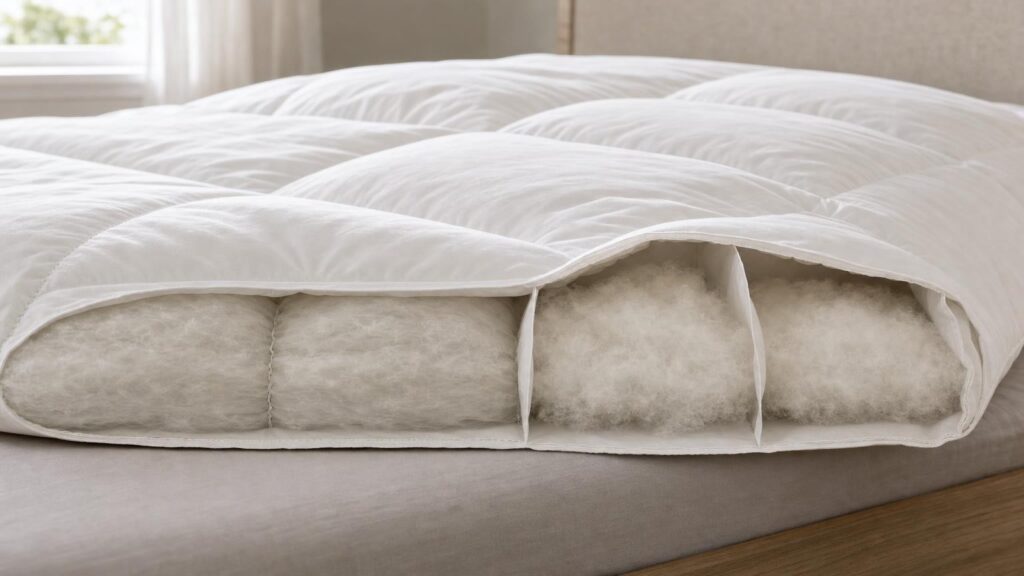
Two duvets can carry similar warmth descriptions yet feel noticeably different in use. One may be lofty and light, while another feels flatter and heavier. One may distribute heat evenly across the bed, while another develops cooler lines or thin areas. These differences come from the way filling, fabric and internal construction work together.
Warmth is not created by filling material alone. It depends on how much air the duvet can trap, how much filling is used, how evenly that filling is held in place and how well the duvet fits around the sleeper. Care and storage also matter because compressed, damp or clumped filling cannot loft as effectively. Understanding these factors makes product specifications more useful and helps reveal why one headline number rarely tells the whole story.
Why duvets with similar warmth descriptions can feel different
A duvet keeps a sleeper warm mainly by holding layers of relatively still air within its filling. The greater the effective loft, the more insulating air the duvet can potentially contain. However, loft must be distributed consistently. Thin sections, compressed seams and empty corners can allow heat to escape even when the duvet looks thick overall.
The sensation of warmth is also personal. Bedroom temperature, sleepwear, mattress insulation and whether someone tends to sleep hot or cold all influence the result. Drape matters too. A flexible duvet that settles around the body may reduce gaps, whereas a stiff or undersized duvet can let warm air escape at the sides.
Weight is a separate part of the experience. Some shoppers like the reassuring pressure of a heavier duvet; others want warmth with as little weight as possible. A warmth label may suggest the intended insulation level, but it does not fully describe loft, pressure, drape or how evenly heat will be distributed.
Fill power and fill weight measure different things
Fill power is primarily used for down. It describes how much volume a given quantity of down can occupy under a defined test method. Higher-fill-power down can generally create more loft from the same amount of material, making it useful where a high warmth-to-weight ratio is wanted.
Fill power is not, by itself, a direct warmth rating. A duvet containing a small quantity of highly efficient down may be light and lofty, but it will not necessarily be warmer than a duvet containing substantially more of a lower-fill-power material. Construction, dimensions and fill distribution also affect the finished result.
Fill weight is the actual quantity of filling inside the duvet. When comparing fill weights, check that the duvets have the same dimensions. A larger duvet needs its filling spread over a greater area, so its total fill weight may be higher without being warmer per square metre.
For a useful comparison, consider fill power and fill weight together:
- Higher fill power with moderate fill weight can create a light, lofty duvet.
- Lower fill power with greater fill weight may achieve substantial insulation but feel heavier.
- High fill power with too little filling can still leave compartments looking underfilled.
- Plenty of filling in restrictive construction may not loft as freely as expected.
Test methods and labelling conventions can vary, so fill-power figures are most helpful when comparing products described using equivalent standards.
Down, feathers and the meaning of blend ratios
Down and feathers are different structures. Down consists of soft clusters with branching filaments that create spaces for trapped air. Feathers have a central shaft and flatter shape, adding structure, substance and weight.
A down-to-feather ratio describes the proportions in the filling. A higher down percentage will often produce a softer, loftier and lighter feel for a given level of insulation. A greater feather content can make a duvet heavier and firmer, and the filling may settle differently within each compartment.
That does not mean the highest down percentage is automatically the best choice. A sleeper who enjoys some weight may prefer a blend with more feather content. Price, care requirements and the desired degree of loft also affect the decision. More importantly, the ratio does not reveal the quantity or efficiency of the filling. A high-down blend used sparingly may provide less insulation than a fuller duvet with a different blend.
Shoppers should therefore read the blend ratio alongside fill power, fill weight, duvet size and construction. The ratio explains character rather than total warmth.
How synthetic fills create loft
Synthetic duvets use manufactured fibres arranged to create insulating air spaces. These may include very fine fibres designed for softness, hollow fibres that contain air within their structure or small clusters intended to move and loft more like loose natural filling. Other synthetic fillings use layered webs rather than free-moving clusters.
These structures do not all behave alike. Fine fibres may feel soft and drape closely but can compact if their structure is not resilient. Hollow fibres may create useful bulk without excessive material, although feel and durability depend on fibre quality and construction. Clustered fills can provide a more mobile, lofty feel, while continuous layers may resist migration but offer a different drape.
Synthetic filling is often chosen for practical care reasons because many products are designed to be washable. This is not universal, however. Duvet size, shell fabric and construction still determine whether home washing is permitted or practical. Synthetic fibres can also retain loft differently after repeated compression and laundering, so the care label remains more reliable than assumptions based on material alone.
Compared with down, synthetic filling commonly needs more material to achieve a similar lofty effect, which can result in greater weight or bulk. On the other hand, some synthetic structures respond predictably to moisture and may be easier for households that want straightforward routine cleaning. Neither category is uniformly warmer, more durable or easier to maintain.
Construction controls where the warmth stays
The shell of a duvet is stitched into channels or compartments to stop filling collecting at one end. The shape and depth of these sections influence loft, heat distribution and movement.
Sewn-through construction
In a sewn-through duvet, the top and bottom shell fabrics are stitched directly together. This creates simple channels, squares or other pockets. The construction controls migration effectively and can make the duvet feel neat and responsive.
The trade-off is that filling is compressed to almost nothing along each stitch line. These lines can become relatively cool areas because they contain little insulating material. This may be less important in a lightweight duvet intended for warmer conditions, but it can limit the evenness of a deeply filled duvet.
Baffled construction
A baffled duvet has internal fabric walls joining the top and bottom shells. These walls create three-dimensional compartments, giving filling more room to expand while reducing direct areas of compression. Baffle-box construction can therefore support greater loft and more consistent insulation.
It is not a guarantee of warmth. Shallow baffles can restrict expansion, while very large compartments may allow filling to drift. Insufficient filling can leave empty areas regardless of construction quality. Smaller compartments usually exert more control over movement, but additional stitching and internal walls can affect weight, flexibility and manufacturing complexity.
Look at both the construction type and how full the compartments appear. A sophisticated box design cannot compensate for unsuitable filling or an inadequate quantity.
Shell fabric affects airflow, feel and fill containment
The outer shell has several jobs: it contains fine filling, allows moisture and air to move appropriately, withstands use and provides the surface feel beneath a duvet cover. Fibre type, yarn size, weave density, fabric weight and finish all contribute.
A tightly woven shell can help prevent fine down, feather tips or synthetic fibres from escaping. It may also feel crisp and produce more sound when moved. A softer or lighter fabric can improve drape, but it still needs enough density and strength for its filling and intended care routine.
Breathability is not determined by fibre name alone. Weave and finish can change how a fabric handles airflow and moisture. Treatments used to alter softness, sheen or containment may also affect feel. Thread count is therefore not a standalone quality score. An extremely dense fabric is not automatically more comfortable, while a lower count does not necessarily indicate poor construction.
Consider whether you prefer a smooth, soft shell or a crisp hotel-like feel, and whether rustling noise is likely to bother you. A duvet cover will modify these characteristics but may not hide them completely.
Why fill shifts, clumps or develops uneven areas
Some settling is normal in duvets containing loose filling. Movement during sleep can push down, feathers or fibre clusters towards compartment edges. Large compartments permit more migration than small ones, and sparsely filled sections are particularly likely to develop thin spots.
Moisture can cause clusters or fibres to stick together, reducing loft. Washing can intensify clumping if the duvet does not have enough room to move or if it is not dried completely. Long periods under heavy compression can also flatten the structure.
Gentle shaking and airing may redistribute dry, healthy filling. Working along individual compartments can help separate temporary clumps, provided this follows the care instructions. Persistent empty areas may instead indicate damaged internal stitching, escaped filling or material that has permanently compacted. If all the filling has moved out of one section because a baffle has failed, surface shaking alone will not restore even distribution.
Translate specifications into the right sleeping experience
Start with the conditions in which the duvet will be used rather than choosing the highest warmth or loft specification available. Consider bedroom temperature across the year, whether you usually feel hot or cold and whether the duvet will be paired with blankets or changed seasonally.
Then compare the complete specification:
- Warmth description: Treat this as a starting point, particularly when comparing items within the same labelling system.
- Fill type: Decide whether you prefer the light loft of down, the added substance of feathers or the care characteristics of a particular synthetic structure.
- Fill efficiency and quantity: For down, read fill power with fill weight. For any duvet, check the dimensions before comparing total filling quantities.
- Construction: Decide whether simple sewn-through pockets suit a lighter duvet or whether baffled compartments are desirable for deeper loft.
- Weight and drape: Think about whether you want barely noticeable insulation or a more substantial covering.
- Shell: Consider softness, crispness, noise, strength and fill containment rather than focusing solely on thread count.
Fit is also important. The duvet must provide enough coverage for the bed and sleeping arrangement. A lofty specification cannot prevent draughts if the duvet regularly pulls away from one sleeper or leaves gaps at the sides.
Care, storage and long-term loft
Before buying, check whether the stated cleaning method suits your household. A duvet may technically be machine washable but too large for a standard domestic drum. Overcrowding can prevent effective rinsing and place strain on both the duvet and appliance.
Drying is equally important. Filling must be dried thoroughly and evenly to prevent persistent clumps, odour and reduced loft. Down and feather products can take considerable time to dry, while thick synthetic duvets may also retain hidden moisture in their centres. Always follow the care label rather than applying a generic method.
Between uses, airing can help release moisture. For longer storage, use a clean, dry and breathable container in a dry location. Avoid leaving a duvet tightly vacuum-packed for prolonged periods unless its instructions specifically support that method. Compression saves space, but extended flattening can make it harder for some fillings to recover their original loft.
Choose the whole duvet, not one headline number
A useful duvet comparison connects filling efficiency, filling quantity, blend, compartment design, shell and care requirements. Fill power indicates how efficiently down can loft, while fill weight shows how much material is present. Blend ratios influence softness, structure and weight. Internal construction determines whether the filling can expand and remain evenly distributed.
The best choice is not necessarily the duvet with the highest figure or most elaborate construction. It is the one that provides the preferred balance of warmth, weight, drape, evenness and manageable upkeep in the room where it will be used. Reading specifications as a connected system makes it much easier to predict how a duvet will actually feel.
Continue exploring on Frowse
Best Sellers · Top Rated · Best Value · Under £50 · Fresh Finds · Premium Picks
Discover More Frowse Insights
- Clumping Clay, Silica and Plant Fibre: How Cat-Litter Materials Behave Differently
- What Feed Dogs, Presser Feet and Hooks Do in a Sewing Machine
- How Steam Irons Produce, Control and Lose Steam
- Why Thicker String-Trimmer Line Is Not Always Better
- Machine-Woven, Tufted and Hand-Knotted Rugs: What Construction Changes